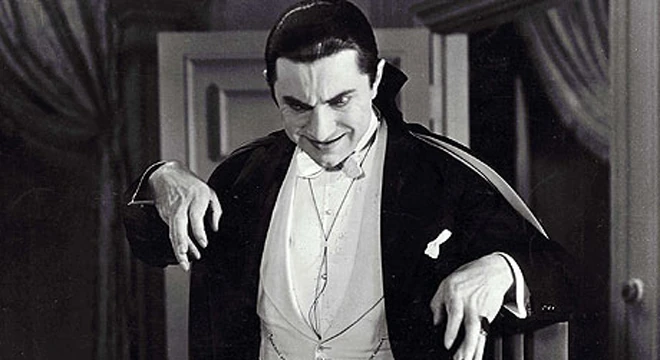
Monday, November 5, 2018

Pushing the Limits With Hammer Films

Hammer Films: A Modest Start

A trailer of The Curse of Frankenstein, the movie that took Hammer out of B features (5):


Hammer Films was started by Enrique Carreras (a cinema owner) and Will Hinds (a professional entertainer) as Exclusive films in 1935. It developed into a family business when James Carreras and Anthony Hinds joined. It was a small production, which made B-rated movies at first. Even when it expanded to a bigger production in 1949, most of the production decisions were dictated by Anthony Hinds. He was on the floor most of the time, working closely with the directors. James Carreras was the one to make the creative decisions, which were based widely off of the shows that were successful on the radio. It was hard for them to move out of B-featured movies because of lack of funding. (2) Their first break out film would not come until 1957, with The Curse of Frankenstein. It became such  a success because it was in color. This horrified audiences at the time, and they did not hesitate to flock to the theaters to see the blood and plunging necklines. (4) 

Hammer Films produced films that were different than the films produced at the time. They were not afraid to push the limits of what was normal, which would eventually lead to their success. The murder scenes were happening on screen for all to see and the movies were more sexually driven. (2) Hammer films was a catalyst for pushing the limits in horror films. Horror films were not very popular in Britain before the success of Hammer films, and were not highly regarded with critics at the time. They had more success with certain scenes staying within their movies in America. The BBFC were a little more strict when it came to what was allowed to be shown in movies. (4)

Dracula: Critics Hate It, But You'll Love It!


A movie poster when it was first released. (3)


The same writer that wrote The Curse Of Frankenstein, Jimmy Sangster, was set to the task of writing Dracula and Terrence Fisher, a director that had worked on plenty of films with Hammer, was to be the one to direct it. One task he was faced with was condensing a long novel, such as Dracula is, into a 90 page script. There was also a tight budget he needed to follow. Many of the iconic scenes in the book could not make the movie because of this. Another factor figured in was the fact that it needed to pass the censors. Already horrified with The Curse of Frankenstein, the BBFC sent a list of things that could not make the final cut, which included the stake being driven into Lucy (with all the horror that follows from that point on) and the disintegration of Dracula. Jimmy and Terrence worked together to make a film that would fit the budget, make money, and pass the censors. (4)

The board was not happy when Hammer films ignored some of their warnings when they sent a copy for approval. However, they did some of the cuts that were required of them. When the BBC was still not happy, James Carreras shot back to the board some of his own unhappiness with their restrictions. He pointed out that an 'X' rating would ban anyone who was too young from seeing it, so some of the restrictions they were asking for were ruining the movie. With a little back and forth, Hammer Films finally passed the censors. Even though critics hated it and found it repulsive, the general public loved it. (4) The movie was a huge hit and the rest is history for Hammer films, who made many more spin offs.

How We View Dracula Today: Not Exactly Stoker's Dracula...

A theatrical trailer of Horror of Dracula, which was a huge hit with viewers (6):


One reason why our ideas of what Dracula is today, and why it is different from what the novel tells us, is because of the success of these films. The movies tell us a different story than the novel because of several factors. The budget changed the way the story plays out for us. Also, the highly charged sexual scenes (more so than those in the book) were more of the style of Hammer films. They were trying to repeat the success of The Curse of Frankenstein, so some of the creative licenses taken were in the name of the great dollar. (4)


We cannot deny the impact Hammer Films had in the history of horror and in movie productions in general. They pushed the limits of what was allowed, and was met with success. Today, we know have movies and shows that would shock people of those earlier times. If you are interested in delving deeper into Hammer films, just follow this link (1) to their website, where Christopher Lee as Dracula is actually the background.


Work Cited:

1. Hammer. Hammer Films LTD, www.hammerfilms.com. Accessed 3 November 2018.

2. Harper, Sue and Porter, Vincent. British Cinema in the 1950s: The Decline of Deference. Oxford University Press, 2003.

3. "Horror of Dracula." Lefthandhorror, 3 November 2018, https://lefthandhorror.com/2014/01/12/horror-of-dracula-1958-movie-review/horror-of-dracula-movie-poster/

4. Jones, Darryl, McCarthy, Elizabeth, and Murphy, Bernice. It Came From the 1950s!: Popular Culture, Popular Anxieties. Palgrave MacMillan Limited, 2011.

5. "The Curse of Frankenstein (1957) Official Trailer - Peter Cushing, Christopher Lee Horror Movie HD." YouTube, uploaded by Movieclips Classic Trailers 14 June 2014, https://www.youtube.com/watch?v=QxNVNGydx5U

6. "The Horror of Dracula (Theatrical Trailer)." YouTube, uploaded by Pedro Benetone 18 May 2012, https://www.youtube.com/watch?v=8Y0UvD8albI

Vampire Fandom: From Travel to Murder

Vampire Fandom: From Travel to Murder

Tourism

Dracula by Bram Stoker is a novel that has influenced many. From movie adaptations to spin offs to remakes, Stoker's novel has created a flurry of vampire-related content. Inevitably, this has created a vampire fanbase. There is a large spectrum of vampire fans. On one side there are casual fans, and on the other there are people who take their connection to vampires to an extreme level. Somewhere in the middle of this spectrum is the tourist population in Romania stemming from peoples' love of Dracula. In an article titled "STALKING THE COUNT: Dracula, Fandom & Tourism," these tourists are discussed. "Bran Castle" in Romania was fixed up to look like what the Count's home in the novel would look like, and is now a popularly visited sight. There are of course some people who just visit because it is something to see while in Romania, but there are also people who are drawn to it because of their love of Dracula. In the article, fans of the novel who visited the castle were interviewed. The similar nature of their answers can be summed up by a line in the article saying, "By drinking in Dracula country, by smelling it, feeling it, seeing it and tasting it, the fans get a livelier and more complete picture; the respondents talk about getting the sense that they have come 'closer to the story.'" (2) It's clear that Bram Stoker's novel has had a pretty big impact on a lot of people if they are willing to travel to Romania for a chance to get a visual from the story. For a chance to understand this feeling without traveling to Romania, below is a video tour of Bran Castle from the tourist attraction's official website.


Real Vampires

The tourist fans of vampires are more common and understandable, making the more mysterious and interesting part of vampire fandom at the other side of the spectrum. On this side, we see a group of people who have brought the creatures to life in a whole new way. These are the real life vampires. Rather I should say people who refer to themselves as vampires. These aren't actual vampires who run around and turn into bats, but a community of people who drink blood, human or animal. Discover Magazine released two articles by John Edgar Browning, a researcher from Georgia Institute of Technology, about his study of some of these so called vampires. Interestingly enough, these vampires have strayed from the classic tale of Dracula and depictions of vampires in popular culture all together. Through his research, Browning got a close look at vampires in different locations, specifically focusing on New Orleans and Buffalo. What he found were human beings who you could see and not even know that they were vampires. He found a group of vampires who don't harm people and sometimes even help them like the New Orleans vampires' work with feeding the homeless. On top of blood, these people sometimes feed on "energies" of people, a less painful way of getting what they feel they need to survive. These vampires have strayed beyond fandom and turned it into a lifestyle. They seem to have very little connection to vampire stories such as Dracula. They are not monsters, but people. (3) (4) However, other accounts find that there are people who do follow Dracula and its monsters more accurately by taking vampirism to a violent place. These people commit acts much closer to Count Dracula's horrific acts of feeding on helpless victims. One story told in a national geographic video below tells of a man who kidnaps and feeds on a woman who managed to escape and tell the tale.


Why We Love Vampires

So what exactly is it that drives this love of vampires? Marry Williamson talks about this in her book "The Lure of The Vampire: Gender, Fiction, and Fandom from Bram Stoker to Buffy." Williamson dedicates her first chapter to Dracula. Bram Stoker's story is one of the most influential vampire stories. Everyone, vampire fan or not, knows the name. That being said, Williamson believes that Dracula has not created the true vampire craze. Though Bela Lugosi's portrayal of Dracula did result in a whole lot of fan mail, particularly from women, Williamson suggests that "sympathetic vampires" have created the real vampire fans. While Williamson is correct about this, we also really do have Dracula to thank for these fans. Even Williamson's choice to dedicate her first chapter to Dracula shows that the novel really is what paved the way for later portrayals. Without Bram Stoker, the sympathetic vampire may have never had such a high place among popular culture. Even though Dracula was released over 100 years ago, the impact its made on culture has still lasted. (1)


Works Cited:

1 O'Connor-Salomon, Kelly A. "Williamson, Milly. The Lure of The Vampire: Gender, Fiction, and Fandom from Bram Stoker to Buffy." Journal of Fantastic in the Arts, no. 2, 2008, p. 265

2 "STALKING THE COUNT: Dracula, Fandom & Tourism."  Conference Papers -- International Communication Association, 2011 Annual Meeting 2011, pp. 1-16.

3 John Edgar Browning. "Real-Life Vampires Exist, and Researches are Studying Them." Discover Magazine, Mar. 2015.

4 John Edgar Browning. "What I Learned Studying Real Vampires." Discover Magazine, May 2018.


Sunday, November 4, 2018

Bloodsucking Plagiarism: Nosferatu vs Dracula

An Introduction to Nosferatu
From the 1922 film
Introduced by Emily Gerard in her 1885 essay Transylvanian Superstitions as a substitute word for 'vampire', the term 'Nosferatu' was later borrowed by Bram Stoker and used in the same way (1). As a Romanian word, Nosferatu is generally perceived  to mean 'repugnant one' or 'unclean spirit', so there's no real surprise that the prince of all darkness himself, Dracula, would be called a 'Nosferatu'. However, as interchangeable as the words are, there was an iconic dispute over the rights to Bram Stoker's 'Dracula' in the production of a 1922 German silent film titled "Nosferatu: A Symphony of Horror". As reported by Johnathan Bailey of "Plagiarism Today", film producer Albin Grau wanted to create an "expressionistic retelling" of the Stoker classic, but was thwarted by the estate of Bram Stoker which was led by his widow Florence. Even after tweaking the script and changing the names of both the Movie and the characters, Grau was still forced to see every copy of his work destroyed except one. That last copy miraculously managed to make it to the United States where 'Dracula' was in the public domain, and the story was allowed to continue (2). I find it to be the strangest coincidence that the one place this piece could dare to exist is the home of Quincey Morris. A land cultured enough to respect the classics, but lawless enough to be indifferent to copyright. God bless America.

The Notable Differences
Aside from a litany of name changes in which Harker becomes Hutter, Dracula becomes Orlok, and Mina becomes Ellen, there are quite a few reported instances of Nosferatu deviating from its source material. Harker (I'll be sticking with the character names as we know them) when first visiting the Count doesn't just brush off all of the superstition thrown at him by the locals. He decides to spend a night at the Inn before leaving to meet the count. It is here that Harker finds "The Book of Vampires" which manages to make it all the way home with him even after his strange fiasco with the count. Notably, when the Count arrives in Wisborg (a German city, and another notable difference), he brings with him the winds of the black plague, as death sweeps through the city. Eventually, Mina comes across "The Book of Vampires" and reads that only a pure woman can break the spell and destroy a vampire. Mina invites the Count into her room by opening her window, and when he arrives she manages to subdue him until morning when the sun comes out and he dies (3). I would speculate that it is this version of the vampire story where we get the idea of vampires being burned (particularly to death) by the sun as a standard in vampire lore. Another notable exception from the novel was the exclusion of Van Helsing altogether.

The Lack of Van Helsing
One thought that preoccupied my mind in the reading of Wayne Hensley's plot overview of Nosferatu was that the silent film completely lacked any reference to the vampire hunter of all vampire hunters: Professor Van Helsing. What Lane Roth seemed to notice in Dracula Meets the Zeitgeist: Nosferatu (1922) as a Film Adaption was something similar. He draws very specific comparisons to Helsing and Dracula, comparing their prestigious titles (count/professor), their authority as males, and their intents to dominate a specific situation. He even takes it a step further by comparing the contrast between the two scenes where the main antagonist dies. He says that while Dracula died in a 'natural' environment, brought down by a 'social' band of heroes, Orlok was brought down in the 'social' sphere of a bedroom by the 'natural' phenomena of sunlight (4). I find this relevant because at the heart of it, the relation between Dracula and Nosferatu was one of copyright infringement. So it's hard for me to say, when one can find an inversion in the climax of the works themselves, can they really be considered the same? I suppose at one time, by some, yes they were considered so. We are only fortunate that this comparison managed to be possible.

Works Cited
(1) Colavito, Jason. Transylvanian Superstitions. <http://www.jasoncolavito.com/transylvanian-superstitions.html> Web.

(2) Bailey, Johnathan. Dracula vs. Nosferatu: A True Copyright Horror Story. Plagiarism Today. <https://www.plagiarismtoday.com/2011/10/17/dracula-vs-nosferatu-a-true-copyright-horror-story/> Web.

(3) Hensley, Wayne. The Contribution of W.F. Murnau's Nosferatu to the Evolution of Dracula. Literature/Film Quarterly. January 1, 2002. Web Access.

(4) Roth, Lane. Dracula Meets the Zeitgeist: Nosferatu (1922) as a Film Adaptation. Literature/Film Quarterly. 1979. Web Access.

The Vampire Fandom

A fandom is an online-based community that focuses on one specific topic that brings like-minded people together to further explore that topic. Although there is a wide variety of fandoms, vampire-based fandoms are one of the more popular topics.

Image result for dracula fandom
"Dracula" Source: Wiki (2)
Fascination towards vampires and the vampire culture has existed for many years. Although it may be true that Stoker's novel brought vampires into the limelight, there has always been a certain captivating feel when it comes to vampire culture, as pointed out in Vampire Rave when they say "Many point to Bram Stoker's Dracula as the source of this fascination, but vampire obsession has lasted much longer" (6).

Although the vampire fandom was created to bring happiness to vampire-lovers, it isn't always a peaceful environment. One of the major arguments within the community discusses what exactly is entailed to be a "real vampire." To be considered "real" or "genuine," blood-sucking isn't always mandatory. In Dracula, one must first drink the blood of  The Count to finalize their transformation (5). This guideline isn't always the case when it comes to making a "real vampire." Depending on what website or book you read, there are different characteristics that exclude someone from being genuine or fake.

"Dracula" (5)
There are websites within the fandom that are completely devoted to one specific genre or theme, much like "The Dracula Society" (3). The Dracula Society focuses it's attention on Bram Stoker's Dracula and all it's surrounding details. It offers users a safe place to talk about their love for vampires while spending time with people that have similar taste. It has "London-based meetings, which include guest speakers, discussions, quizzes, film and video screenings, and auctions" (3).

A common trend found in the vampire fandom community is the act of role playing. Whether strictly for fun or sexual, role playing allows the individual to metaphorically step into the shoes of someone else for a while. As discussed in Variations on Vampires, "Like all forms of fantasy, role playing games or "RPGs," both computer based and live, create simplified worlds, where rules are clearly articulated and inhabitants behave in fantastic ways" (4). While role playing, that person has a better insight into the life of the person or being they are acting as.

"Dracula RPG" (1)
Although member of the community can create their own personalized role playing games, there are pre-made options available for purchase. One of them is called "Bram Stoker's Role Playing Game," where it gives you a description of who you are and what your mission is (1). These are a great option for someone with less time on their hands, although it doesn't allow much room for personalization.

Overall, the vampire fandom is a great community full of people that share a common interest. Some people may look down on it and give it a bad rap, but at the end of the day that doesn't matter. It's an awesome way to meet new people and learn more about a topic that interests you!


Works Cited

(1) "Bram Stoker's Role Playing Game." RPGGeek, rpggeek.com/rpgitem/51972/bram-stokers-dracula-role-playing-game.

(2) "Dracula Wiki." Dracula Wiki | FANDOM Powered by Wikia, dracula.wikia.com/wiki/Dracula_Wiki.

(3) Hawley, Dave. "The Dracula Society." About the Society, www.thedraculasociety.org.uk/about-the-society.html.

(4) Milspaw, Yvonne J., and Wesley K. Evans. EBSCOhost, proxy-bloomu.klnpa.org/login?url=http://search.ebscohost.com/login.aspx?direct=true&db=hus&AN=509987327&site=eds-live&scope=site.Accessed 4 Nov. 2018

(5) Stoker, Bram, et al. Dracula. W. W. Norton & Company, Inc.,1997.

(6) Thompson. "Vampire Rave is for Real Vampires." Real Vampires Love Vampire Rave., www.vampirerave.com/.


Tourism and Dracula in Romania


Although part of the novel by Bram Stoker, Dracula, is set in a remote area of central Romania known as Transylvania, his descriptions of the area and of Castle Dracula were all largely taken from his imagination. Stoker had never visited Transylvania, yet it is his "description of Transylvania -- dark, wild, untouched by science and modernity -- that is the novel's most evocative achievement" (1). 

Romania's Political Motivation to Attract Tourists 

The levels of tourism in Romania began to increase exponentially with the release of film adaptations of Dracula in the 20th century, benefiting the country greatly. "Tourist numbers increased from just 5,000 in 1956 to 103,000 in 1960. By 1970, they had reached 2,300,000" (1). Romania was, at that time, still a communist state, allied to the Soviet Union since the Warsaw Pact of 1955. However, with tourism on the incline due to Stoker's Dracula, Romania "was eager to present itself to the West as an independent communist country and tourism was to play a role" in promoting friendly relations abroad (1). Since Romania was eager to attract western tourists in order to demonstrate its ideological achievements and independence from the Soviet Union, the state made travel easier for tourists with inexpensive visas, minimal border formalities, and fewer restrictions once the tourists were inside the country. In turn, the tourists would generate hard currency that would be used to import western technology.

Dracula Tourism in Romania and Romania's Response

Dracula tourism started to grow in Romania during the 1970s after the release of different film adaptations of Stoker's novel. Since the locations in the novel such as Castle Dracula were entirely of Stoker's imagination, tourists began to think of Bran Castle as Castle Dracula, even though the castle has no relation to the novel whatsoever. For the most part, the interest in Dracula tourism is diverse, with tourists visiting for many of their own different purposes. According to Candrea, "Some tourists could be identified as literary tourists, some as film tourists, some were looking for the supernatural roots of the Dracula myth and some were interested in the historical Dracula character, Vlad the Impaler" (2).

Unfortunately, the novel Dracula was not published in Romania until 1990 so many Romanians were naive to anything about the novel. Tourists had been coming to Romania seeking the Count for years only to be sorely disappointed upon discovering that most Romanians knew nothing about Dracula. When asked by tourists about vampires or for directions to Castle Dracula, most Romanians were bewildered. 

When Dracula tourism first began to increase in the 1970s, Romania's response to it "was tolerant but not encouraging" (2). Tourism which was based on something supernatural, such as vampires, was fundamentally at odds with "Romania's identity as a socialist state and was not something that the government wanted to endorse" (2). In 1972 a travel company called General Tours launched the first ever Dracula-themed tour, "Spotlight on Dracula" (1). Romanians were not ready for a tour such as this one, which advised its participants to stock up on garlic, so the tourism minister loan Cosma began a group to discuss how Romania should respond to the growing interest.
An image of Bran Castle taken from long distance showing the large castle with the orange tiled turrets that rise above the trees (3). 

In 1973, Romania's ministry of tourism developed its own tour, "Dracula: Legend and Truth" which was intended to "firmly draw a line between the historical Dracula and the fictional vampire" (1). Romania's official position was of tolerance but discouragement towards Dracula tourism until the communist regime collapsed in December 1989. This did not deter foreign tourists who, lacking a real Castle Dracula to visit, found what they were looking for in what was officially a museum of medieval art known as Bran Castle. Although it had no link to Stoker's novel, Bran Castle became known as Dracula's Castle in the 1960s.

Inside Bran Castle

Bran Castle is perched "dramatically on a hill in Transylvania, its burnt-orange-tiled turrets and steeples rising above a crown of trees in Romania's Carpathian Mountains" (3). It was once a castle inhabited by Queen Marie of Romania from 1920 to 1938.
Inside the castle, there are numerous rooms and even a secret stairway to a library. Bran Castle was converted by communist authorities into a museum in 1956. Today, Dracula tourism is still popular in Romania. According to Amy Alipio, "Tour companies often book Bran Castle for Halloween parties, complete with 'bloody' vodka shots and a DJ" (3).
 This is a video that provides great views of Bran Castle from the outside, as well as providing a brief tour through the rooms inside the castle (4).

Although Dracula's castle never truly existed in real life, many fans of Dracula still make the pilgrimage to Transylvania in order to feel closer to Bram Stoker's story. Their determination and ability to appreciate Bran Castle as if it is Dracula's castle shows the impact that this novel has had on the world, even generations later.

Works Cited

(1) Light, Duncan. "Romania's Problem with Dracula." History Today, vol. 67, no. 5, May 2017, pp. 
62-65. EBSCOhost, proxy-bloomu.klnpa.org/login?
url=http://search.ebscohost.com/login.aspx?direct=true&db=30h&AN=122332425&site=eds-live&scope=site.

(2) CANDREA, Adina Nicoleta, et al. "Marketing the Count's Way: How Dracula's Myth Can Revive Romanian Tourism." Bulletin of the Transilvania  University of Brasov. Series V: Economic Sciences, vol. 9, no. 1, Jan. 2016, pp/ 81-90. EBSCOhost, proxy-bloomu-klnpa.org/login?url=http://search.ebscohost.com/login.aspx?
direct=true&db=bth&AN=121777847&site=eds-live&scope=site.

(3)  Alipio, Amy. "Inside the Fortress Known as 'Dracula's Castle'." National Geographic, 28 Sept. 2018, www.nationalgeographic.com/travel/destinations/europe/romania/dracula-castle-things-to-do-brasov-transylvania/.

(4) http://www.bran-castle.com/index.html

Inside the World of Vampire Fandoms

Over the years, the trend of vampires has come and gone many times. The most memorable wave of vampire trends for my generation, of course, would be the Twilight series. The first book of the Twilight series, which was first released in October of 2005, quickly gained a huge following, which only continued to grow as the series began to transform into an on screen phenomenon in 2008. The Twilight series easily became one of the biggest causes of the vampire obsession of our childhoods.

Around the same time period that Twilight began to rapidly grow, the use of social media seemed to skyrocket as well; many vampire fan pages and role-playing communities began to make its entrance to the web. On Twitter, there is a massive online role-playing community for the hit television show The Vampire Diaries. Role-players will often create an online persona for themselves, either depicting an actually character from the story of choice, or creating their own character based on attributes present in other characters of that story. Some role-players will chose to continue on the story lines of characters who didn't get some of their connections fully developed, while others will chose to completely rewrite the existing characters to create a story line of their own(2).

Often times in these online role-playing communities, many members will adopt the commonly known variations of Gothic or Victorian styles. Many members will display Gothic themed backgrounds, photos, music, and graphics on their online profiles to express the character they are engaging in(3).

A common trend among fandoms, especially in the vampire community, is the use of fan fiction. Fan fiction is where a fan of a specific story will create their own fiction writings, based off the characters or themes in the previously existing story they are following. One of the most popular sites where this fan fiction is shared, is an online storytelling platform called wattpad.com. Already being familiar with the site, I decided to do my own digging on the site; just by searching the words "vampire fanfiction" in the search bar, a result of over 18,500 stories were given to me. In many cases, people will even turn their favorite celebrities into vampires for the sake of their stories. You can find vampire fanfiction including anything from Twilight and The Vampire Diaries to fans writing about members of the popular boy band One Direction turning their fans into vampires(4).

For those vampire lovers who would prefer the in person communications, many fans have adopted live action roleplaying, commonly known as LARP. One popular LARP convention among vampire fans is the Convention of Thorns. Convention of Thorns began in 2016 in Poland. This masquerade themed LARP gives roleplayers a space to play out the characters they have created in a community where others will build off of their stories, and where roleplayers can enjoy themselves without judgement, because everyone is there for the same reason. Every year, a little less than 200 people will be allowed to attend the Convention of Thorns. There is a participation fee, costing around 500 euros for each person(1).

You can find the online trailer for Convention of Thorns here:


Fans of the vampire community have explored their love of the supernatural creatures in many ways over the decades, with their options increasing rapidly as the internet advances and more and more people are being introduced to the world of roleplaying and LARP. 


Works Cited

1. Bowman, Sarah Lynne. “White Wolf's Convention of Thorns: A Blockbuster Larp in the Nordic Style.” Nordic Larp, 6 Dec. 2016, nordiclarp.org/2016/12/06/white-wolfs-convention-of-thorns/.

2. Jeewa , Zakia. “Social Network Fandoms & Online Role-Playing: Harry Potter and The Vampire Diaries Fans on Twitter.” Social Network Fandoms & Online Role-Playing: Harry Potter and The Vampire Diaries Fans on Twitter, 2014, pp. 138–146.

3. Mellins, Maria. “The Female Vampire Community and Online Social Networks: Virtual Celebrity and Mini Communities: Initial Thoughts.” International Journal of Media & Cultural Politics, vol. 4, no. 2, May 2008, pp. 254–258. EBSCOhost, doi:10.1386/macp.4.2.254pass:[_]3.

4. Vampire Fanfiction - Wattpad, www.wattpad.com/search/vampire%20fanfiction.


From the Middle Ages to Modern Times: The Legacy of Bran Castle

A distant view of the historic Bran Castle, located in Romania (1).
Even though Dracula was originally published in 1897, the legacy of the mysterious Count still lives on to this day. One historic landmark contributing to this legacy, Romania's picturesque Bran Castle, draws numerous inquisitive visitors each year due to its deep history and association with the classic character. 


(Not So) Humble Beginnings 


King Louis I (1326-1382), also
known as King Louis the Great
(5).
      Construction on this impressive structure first began in 1377, when King Louis the Great of Hungary permitted the people of the Brasov region to construct the castle "as a bulwark against northward expansion of the Ottoman Empire" (4). Construction of Bran Castle took 11 years to complete, as the project was finally finished in 1388 (5). Aside from its primary function of guarding the region against the Ottomans, the structure also became "a customs house for Transylvania, then a voivodate (province) of Hungary" (4).  

A map showing Romania and a few surrounding
countries; the location of Bran Castle is indicated
by the red dot (5).


            The people of the Brasov region purchased Bran Castle from the new King of Hungary, Vladislas II, in 1498 (4). They retained ownership for years to come, and (impressively) managed to hold it "after the conquest of the Hungarian capital by the Ottoman sultan Suleyman the Magnificant" in the year 1541 (4).  

     From this point on, Bran Castle would remain in the hands of the Transylvanian people for hundreds of years; their hold of it was further solidified by a decree called the Diploma Leopoldinum in 1690 (4). Regular maintenance was performed on the castle to maintain its service as a fortress up until the 1880's, but the castle sadly deteriorated after this (4). 


Given New Life 


     Bran Castle was turned over to the Romanian Queen Marie in 1920; Marie restored Bran Castle as her "summer residence," even constructing a brand new tea house (which has since become a popular restaurant) (4). 


Pictured above is Queen Marie's tea house as it stands
today. Since its construction, the house has been
renovated into a popular restaurant, "Casa de Ceai,"
which literally means "tea house" in Romanian (5).
Queen Marie of
Romania (1875-1938)
(5).


      The castle remained in Marie's possession until her death in 1938, at which time possession passed to her daughter, Ileana. Unfortunately, the princess was forced to flee the country ten years later by a newly formed communist regime, who took control of the castle and opened it as a public museum in 1956 (4). 


Archduke Dominic, Archduchess Maria Magdalena,
 and Archduchess Elisabeth pictured in 2009 when they
regained ownership of their mother's castle (5). 

      Princess Ileana passed away in 1991 (in Pennsylvania, coincidentally) (5), causing the new post-communist government in Romania to hand over possession of Bran Castle to her children, Archduke Dominic, Archduchess Maria Magdalena and Archduchess Elisabeth (5). Ileana's children decided to keep the castle open to the public as a museum, and it has attracted countless visitors ever since.


Home of Dracula?


     It's clear that Bran Castle has a rich, illustrious history. But why is this place associated with the fictitious Count by so many? One reason is the castle's appearance. As the video tour below displays, Bran Castle shares many physical similarities to the location described in Stoker's novel (2):


The frightening fellow known as Vlad
the Impaler (1431-1476) (5). 
     Additionally, Nicolae Pepene, a historian from the area surrounding Bran Castle, explains that "when Romania was ruled by a communist government [in the 1960s], its tourism czars decided it could be advantageous to market a place associated with Vlad Tepes...They looked around at all of the available castles and decided that this castle at Bran, which guarded the one mountain pass running between Transylvania and Walachia, looked sufficiently Gothic" (1). Vlad Tepes, more commonly known as Vlad the Impaler, is believed by many to have inspired Stoker's Count Dracula (5). 

     According to some accounts, however, Vlad the Impaler is believed to have an even stronger association with the castle than a simple lie made up by a communist government. Allegedly, Vlad Tepes spent two months as a prisoner within Bran Castle after being captured by the Hungarian army in 1942 (5). Whether or not this account holds any truth, this rumored association was seemingly enough for a large number of people to associate this landmark with the fictional Count Dracula. 
     
     In fact, the website for the tourist attraction actually has a section about Dracula, including this disclaimer: "Visitors to Bran Castle should make the distinction between the historic reality of Bran and the character of the Count in Bram Stoker’s novel. Dracula exists in the imagination" (5).


    Modern Tourism


     Regardless of where the rumors connecting Dracula and Bran Castle originated, the current owners of the attraction have taken full advantage of them. One of their events that draws the most tourists to the area year after year is their annual Halloween party, which they have an interesting way of promoting. In fact, here's something that was posted on Bran Castle's official Facebook page on October 25:


This is the photo that accompanied the Facebook post
promoting the Halloween event at Bran Castle; a man
dressed in a Dracula costume rode through town
to advertise the upcoming party (3).

      "Breaking News! The count was seen at dawn in Bucharest! Surveillance Cameras at a material warehouse caught him running a motorcycle. The scientific community is on alert, the photo proving without the right of appeal that the famous vampire has found a way to get out in the sunlight without it damaging them. The smile on the count's face is more than eloquent... the servants of bran wonder if the reason elopement is a young miss. We'll all find out on Saturday, October 27, 2018, at Halloween Monster party. 2 days left!!!" (3) 


      Halloween isn't the only holiday given some Dracula-themed flair at Bran Castle; even Valentine's Day gets the "spooky" treatment. A post on the Bran Castle website from February 14, 2014 reads:


Two happy couples enjoy a Valentine's Day
meal in one of the rooms of Bran Castle (5).
    

  "The hints of spring envelop Bran Castle and the shriveled souls start to wake. Count Dracula is no exception; every year he hopes for a wonderful day to celebrate love. This is the reason why preparations already started for Valentine’s Day" (5).


      While it's safe to assume that a majority of Bran Castle's visitors don't actually believe the rumors of Dracula's presence that surround the historic site, one thing is clear: the fantasy that has been created there will continue to draw inquisitive tourists for years to come.  


To learn more about Bran Castle, you can visit their website here.


Works Cited
(1) Alipio, Amy. “Inside the Fortress Known as ‘Dracula Castle.’” National Geographic, 28 September 2018, https://www.nationalgeographic.com/travel/destinations/europe/romania/dracula-castle-things-to-do-brasov-transylvania/.  
(2) Bran Castle. “Castelul Bran - Bran Castle - Dracula's Castle in Transylvania” YouTube, 18 April 2016, https://www.youtube.com/watch?v=UHRcQmQ_hK0. 
(3) Bran Castle Official. “Breaking News! The count was seen at dawn in Bucharest! Surveillance Cameras at a material warehouse caught him running a motorcycle.” Facebook, October 2018, https://www.facebook.com/BranCastleOfficial/photos/rpp.271245442947669/2279524482119745/?type=3&theater. 
(4) Lewis, Robert. “Bran Castle.” Encyclopedia Britannica, 2017. 
(5) The Bran Branch Administration Company, Bran Castle – The Official Website. 2017, http://www.bran-castle.com/index.html.